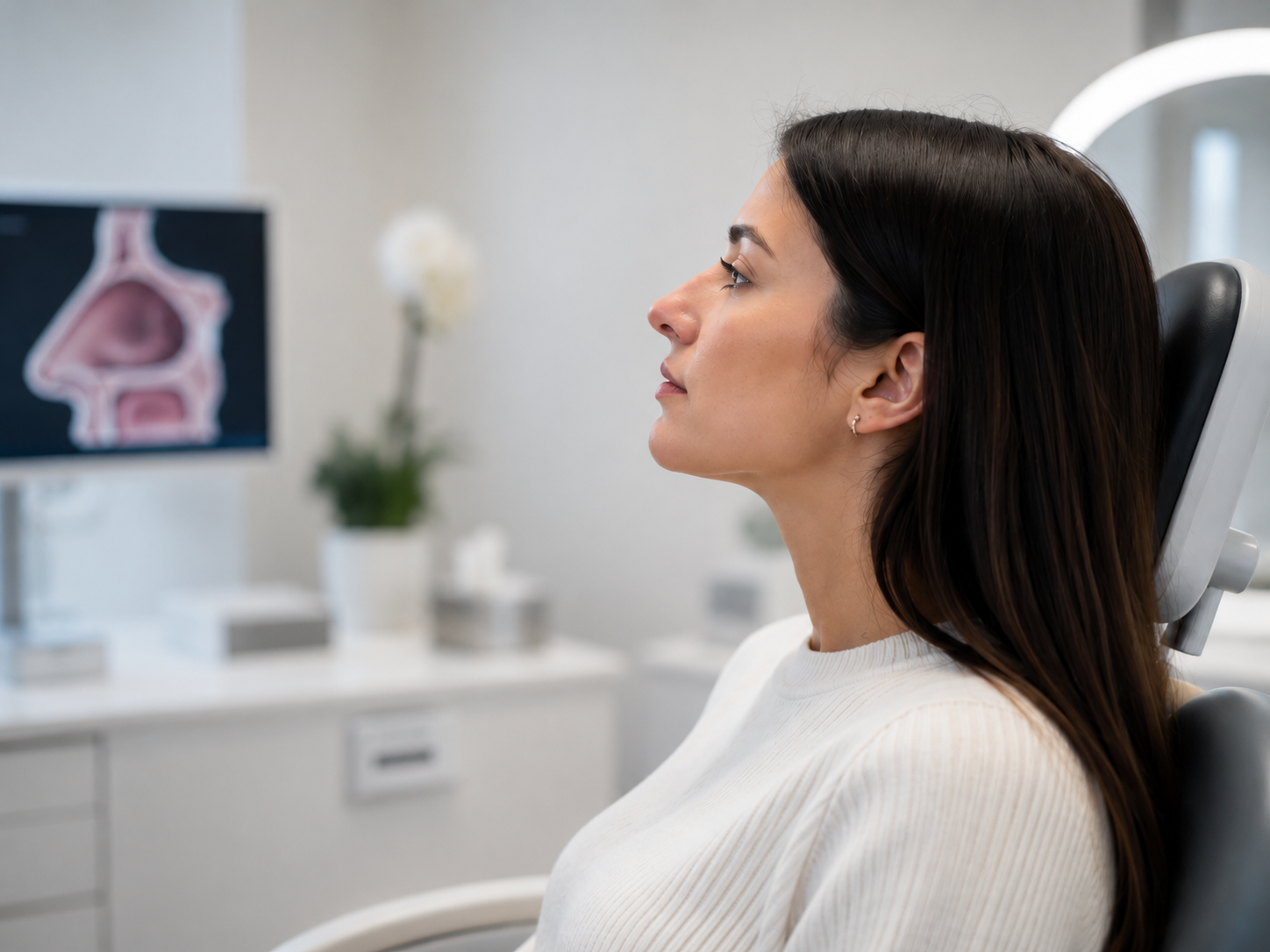
Rhinoplasty is often thought of as cosmetic nose surgery, but in some cases it can also help improve breathing. The nose is not only an important part of facial appearance, it is also a functional airway. If the structure of the nose affects how air moves through the nasal passages, surgery may be considered to improve both shape and airflow.
For some patients, the issue is mainly cosmetic. For others, the main concern is a blocked nose, poor airflow, mouth breathing, snoring, or difficulty breathing through one side of the nose. Many patients have a combination of both concerns, especially if the nose is crooked, has been injured, or if there is a deviated septum.
This is where careful assessment is important. Rhinoplasty alone is not always the answer for breathing problems. In many cases, the correct procedure may be functional rhinoplasty, septoplasty, or septorhinoplasty.
What is rhinoplasty?
Rhinoplasty is surgery to change the shape or structure of the nose. It may involve altering the bridge, tip, nostrils, profile or overall balance of the nose. Cosmetic rhinoplasty focuses mainly on appearance. Patients may consider it if they are unhappy with the size, shape, bump, angle or symmetry of their nose.
Functional rhinoplasty is different. It is designed to improve how the nose works as an airway. This may involve supporting, reshaping or correcting parts of the nose that are causing obstruction. Some patients need both cosmetic and functional changes at the same time. In these cases, surgery may aim to improve the appearance of the nose while also helping nasal breathing.
When can rhinoplasty help with breathing?
Rhinoplasty may help breathing when the problem is caused by the structure of the nose. This means there is a physical issue affecting airflow, rather than a temporary problem such as a cold, allergy flare-up or sinus infection.
Rhinoplasty or related nose surgery may help if breathing problems are linked to a crooked nose, previous injury, narrow nasal passages, nasal valve collapse, weak nasal support, or structural changes affecting the outside and inside of the nose.
For example, if the nose has been broken in the past, the external shape may be altered and the internal airway may also be narrowed. In this situation, changing the outside structure of the nose may also be part of improving airflow.
This is one of the reasons why patients considering nose surgery in Essex should be assessed by a consultant who understands both the appearance of the nose and the function of the nasal airway.
What is the difference between rhinoplasty and Septoplasty?
Rhinoplasty changes the external structure or appearance of the nose. Septoplasty is different. Septoplasty is surgery to correct the septum, which is the wall of cartilage and bone that separates the two sides of the nose.
If the septum is bent or deviated, it can narrow one side of the nasal airway and make breathing more difficult. Septoplasty is usually performed to improve airflow rather than to change the outside appearance of the nose.
In simple terms, rhinoplasty focuses more on the shape of the nose, while septoplasty focuses more on the internal partition inside the nose.
However, the two procedures are sometimes combined. This is called septorhinoplasty.
What is Septorhinoplasty?
Septorhinoplasty combines rhinoplasty and septoplasty. It may be recommended when a patient has concerns about the appearance of the nose as well as breathing problems caused by the internal structure of the nose.
This can be particularly relevant for patients with a crooked nose, previous nasal trauma, a deviated septum, or obstruction caused by both internal and external nasal changes.
Septorhinoplasty can be used to improve nasal balance and support while also addressing airflow. The exact approach depends on the cause of the breathing problem and the changes needed.
Can cosmetic rhinoplasty make breathing worse?
In some cases, poorly planned cosmetic nose surgery can affect breathing. This is usually because too much support has been removed, the nasal passages have been narrowed, or the nasal valve area has not been properly considered. However, nasal breathing can get worse even after properly executed surgery – this happens due to scar tissue and fibrosis, which in some patients can have a weakening effect on the nasal sidewalls.
This is why it is important for rhinoplasty to be planned carefully. The nose needs to look balanced, but it also needs to work properly.
A good assessment should look at both appearance and function. Even if a patient is mainly interested in cosmetic changes, the internal airway still needs to be considered before surgery.
What is nasal valve collapse?
The nasal valve is one of the narrowest parts of the nasal airway. If this area is weak or narrowed, it can restrict airflow and make breathing feel difficult.
Nasal valve collapse can happen naturally, after injury, or following previous surgery. Some patients notice that their breathing improves if they gently pull the side of the nose outwards. This can be a sign that the nasal valve area may be involved, although a proper medical assessment is needed.
Functional rhinoplasty may be used to improve support in this area and help the airway stay open.
How do I know if rhinoplasty could help my breathing?
The first step is a consultation. Breathing problems can have several causes, and not all of them require surgery.
A blocked nose may be caused by a deviated septum, enlarged turbinates, nasal valve collapse, allergies, inflammation, sinus problems, nasal polyps, or a combination of factors.
During an ENT assessment, the inside and outside of the nose can be examined. This may include looking at the septum, nasal passages, nasal valve area, and the general structure of the nose. In some cases, nasal endoscopy or further investigations may be recommended.
This helps identify whether rhinoplasty, septoplasty, septorhinoplasty or another treatment would be most suitable.
Will rhinoplasty completely fix breathing problems?
Rhinoplasty can improve breathing for the right patient, but it is important to have realistic expectations.
If the breathing problem is mainly caused by the structure of the nose, surgery may help. If the problem is mainly caused by allergies, inflammation or sinus disease, other treatments may be needed instead.
Some patients need medical treatment before surgery is considered. Others may need a combined surgical approach, especially if more than one part of the nose is contributing to the obstruction.
The aim of consultation is to understand the cause of the problem and recommend the most appropriate treatment.
What is recovery like after functional nose surgery?
Recovery depends on the type of surgery performed. Septoplasty, rhinoplasty and septorhinoplasty can all involve different recovery times.
After surgery, it is common to have swelling, bruising, congestion, tenderness and a blocked feeling in the nose. This usually improves gradually. Some patients may need a splint or dressing for a short period after surgery.
Many people return to desk-based work after around one to two weeks, although this varies depending on the procedure and the individual. Strenuous exercise, heavy lifting and contact sport usually need to be avoided for longer.
Final results after rhinoplasty or septorhinoplasty can take several months to over a year to settle fully, especially as swelling gradually reduces.
Why see an ENT surgeon for breathing problems and rhinoplasty?
The nose has both cosmetic and functional importance. For patients who want to improve breathing, it is particularly important that the internal airway is assessed properly.
A consultant ENT surgeon can assess nasal structure, airflow, septal deviation, nasal valve function and other causes of obstruction. This is especially helpful when patients are considering surgery that may affect both appearance and breathing.
At London ENT, Professor Paul Chatrath provides consultant-led assessment for patients considering rhinoplasty, septoplasty, septorhinoplasty and functional nose surgery. Patients are given clear advice about their options, including whether surgery is appropriate and what type of procedure may be most suitable.
Can rhinoplasty improve breathing?
Yes, rhinoplasty can improve breathing in some patients, but only when the breathing issue is linked to the structure of the nose. If there is a deviated septum, nasal valve collapse, crooked nose, previous injury or other structural obstruction, functional rhinoplasty or septorhinoplasty may be considered.
If your main concern is nasal blockage, poor airflow, or a combination of breathing and cosmetic concerns, the best starting point is a detailed ENT consultation.
London ENT sees patients considering nose surgery in Essex, including rhinoplasty, septoplasty and septorhinoplasty. A consultation can help identify the cause of your symptoms and explain the most appropriate treatment options.