Nose Surgery in Essex by a Consultant ENT Surgeon
If you are considering nose surgery in Essex, London ENT provides consultant-led care for patients looking to improve the appearance of the nose, improve nasal breathing, or address both concerns together.
Professor Paul Chatrath is a Consultant ENT Surgeon with specialist experience in rhinology, rhinoplasty and septorhinoplasty. He sees patients from across Essex, inclu
ding Brentwood, Chelmsford, Billericay, Shenfield, Basildon, Romford, Southend and surrounding areas.
Nose surgery is a highly personal decision. Some patients are concerned about the shape, size or symmetry of their nose, while others are looking for help with a blocked nose, a deviated septum, nasal valve collapse or breathing problems after injury. Many patients have both cosmetic and functional concerns, which is why careful assessment by an ENT surgeon with nasal surgery experience is important.
At London ENT, the aim is to provide clear, honest advice so you understand your options, the likely benefits, the limitations of surgery and what recovery may involve before making any decision.
Nose surgery options in Essex
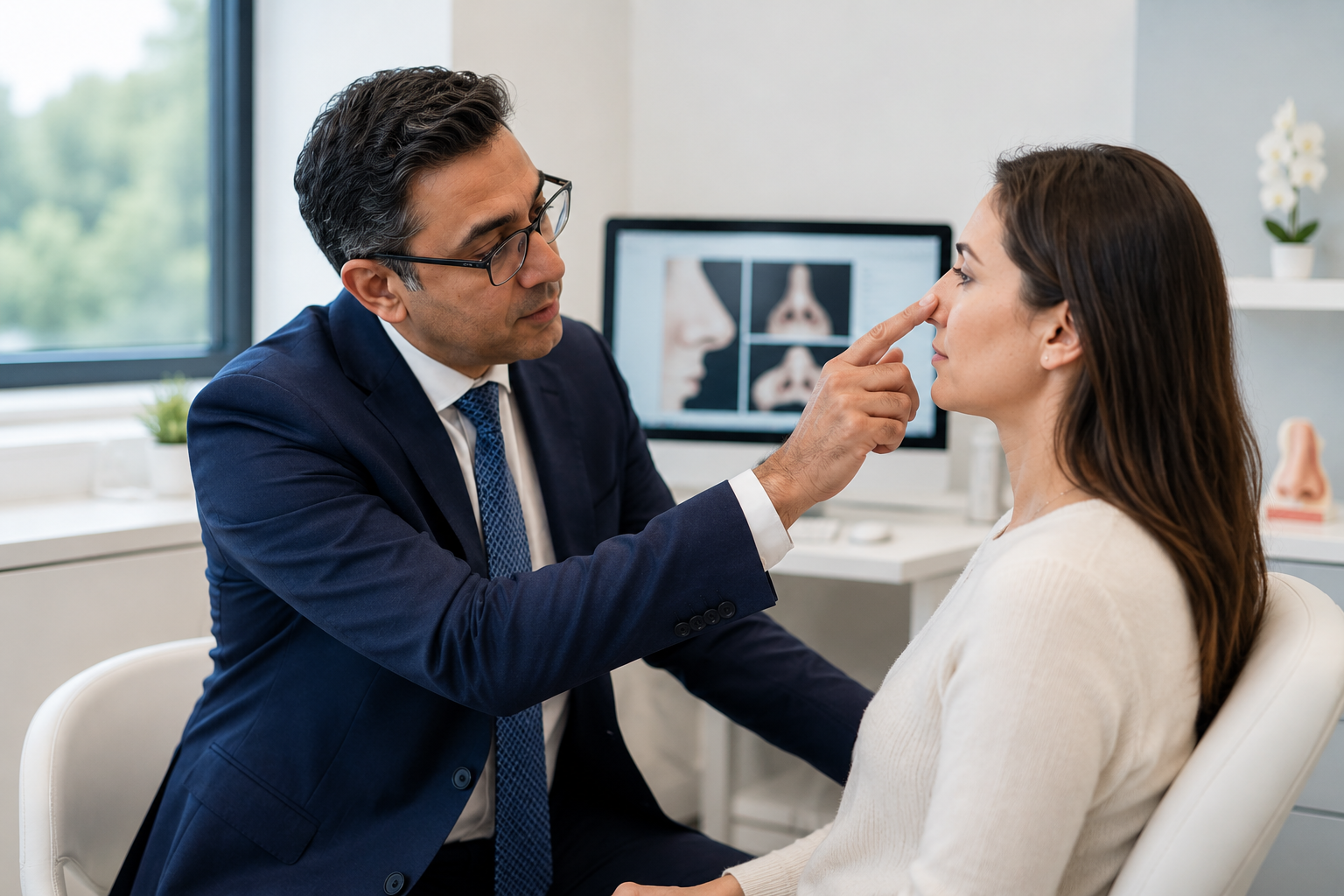
Nose surgery can involve several different procedures depending on your symptoms, anatomy and goals. During your consultation, your nose will be assessed externally and internally to understand both appearance and airflow.
Common types of nose surgery include:
Rhinoplasty
Rhinoplasty is surgery to reshape the nose. It may be used to refine the bridge, tip, nostrils or overall balance of the nose. Some patients consider rhinoplasty after an injury, while others have longstanding concerns about the size, shape or symmetry of their nose.
Rhinoplasty should be planned carefully, with realistic expectations. The aim is usually to create a natural-looking result that is in proportion with the rest of the face, rather than an obvious or overdone change.
Septorhinoplasty
Septorhinoplasty combines cosmetic nose reshaping with correction of the septum, which is the wall of cartilage and bone inside the nose. This may be recommended if you want to improve the appearance of your nose and also improve breathing.
This is often suitable for patients who have a deviated septum, previous nasal injury, a crooked nose, obstruction on one or both sides, or a combination of cosmetic and functional concerns.
Septoplasty
Septoplasty focuses on correcting a deviated septum inside the nose. It is usually performed to improve nasal airflow rather than change the outside appearance of the nose.
Patients with a deviated septum may experience persistent blockage, difficulty breathing through one side of the nose, disturbed sleep, snoring, mouth breathing or recurrent nasal symptoms. In some cases, septoplasty may be combined with other procedures if there are additional structural issues.
Functional nose surgery
Functional nose surgery is designed to improve breathing by correcting structural problems that affect airflow. This may include nasal valve collapse, septal deviation, enlarged turbinates, trauma-related changes or narrowing inside the nose.
For some patients, functional rhinoplasty or septorhinoplasty may be recommended when both the internal airway and external nasal structure need to be addressed. ENT UK also provides patient information about common ear, nose and throat conditions.
What concerns can nose surgery help with?
Patients consider nose surgery for different reasons. Some concerns are cosmetic, some are functional, and many involve both.
Nose surgery may be considered for:
- A bump on the bridge of the nose
- A crooked or twisted nose
- A drooping or bulbous nasal tip
- Nasal asymmetry
- Breathing problems through one or both nostrils
- A deviated septum
- Nasal valve collapse
- Changes after a sports injury or accident
- A nose that feels out of balance with the rest of the face
- Previous surgery where the result has not met expectations
The right treatment depends on the cause of the problem. For example, a patient with a blocked nose may not need cosmetic rhinoplasty, while a patient with a visibly crooked nose and breathing symptoms may need a combined septorhinoplasty.
That is why the consultation is an important part of the process. It helps identify whether surgery is appropriate and, if so, which type of surgery is most likely to help.
Cosmetic and functional nose surgery
A key part of nose surgery planning is understanding whether the main goal is appearance, breathing or both.
Cosmetic nose surgery focuses on the visible shape of the nose. This may include adjusting the bridge, reducing a hump, refining the tip, improving symmetry or changing the overall profile.
Functional nose surgery focuses on airflow. This may involve straightening the septum, improving support in the nasal valve area, reducing obstruction or improving the internal structure of the nose.
In many cases, these two areas overlap. The outside shape of the nose and the inside structure are closely connected, so changes to one can affect the other. A consultant ENT surgeon with experience in nasal function can assess both sides of the problem and explain the best approach.
Who is a good candidate for nose surgery?
You may be suitable for nose surgery if you are physically healthy, have realistic expectations and have a clear reason for considering treatment.
Good candidates may include patients who:
- Are unhappy with the appearance of their nose
- Have breathing problems caused by structural issues
- Have a deviated septum or nasal obstruction
- Have had nasal trauma or injury
- Want a natural result that fits their face
- Understand that swelling and final results take time
- Are looking for consultant-led advice before deciding
Nose surgery may not be suitable if your expectations are unrealistic, if your symptoms are unlikely to be helped by surgery, or if there are medical reasons why surgery would carry unnecessary risk. During your consultation, Professor Chatrath will explain whether surgery is appropriate and discuss any alternative options where relevant.
Your consultation
Your consultation is designed to give you a clear understanding of your options.
This will usually include a discussion about your symptoms, medical history, concerns, expectations and any previous nasal treatment or surgery. The nose will be examined externally and internally, with attention given to both shape and breathing.
Where appropriate, further investigations may be recommended. These may include nasal endoscopy, imaging or other assessments depending on your symptoms.
You will also have the opportunity to ask questions about the procedure, likely outcome, recovery, risks, aftercare and costs. The aim is to help you make an informed decision, without pressure.
What happens during nose surgery?
The exact procedure depends on the type of surgery being carried out.
Rhinoplasty, septorhinoplasty and more complex functional nose surgery are usually performed under general anaesthetic. Surgery may involve reshaping cartilage and bone, correcting the septum, improving the nasal airway, adjusting the nasal tip, or refining the bridge of the nose.
Some procedures are performed using a closed approach, where incisions are made inside the nose. Others may require an open approach, where a small incision is made across the columella, the skin between the nostrils. The most suitable technique depends on the complexity of the case and the changes needed.
Before any procedure, you will be given a clear explanation of what is planned and why.
Recovery after nose surgery
Recovery varies depending on the type of surgery performed. Some patients recover more quickly after septoplasty, while more complex rhinoplasty or septorhinoplasty can involve a longer recovery period.
It is common to experience swelling, bruising, tenderness and a blocked feeling in the early stages. A splint or dressing may be used after surgery and is usually removed at a follow-up appointment.
Many patients return to desk-based work after around one to two weeks, although this varies. Strenuous exercise, contact sport and heavy lifting usually need to be avoided for longer. Swelling reduces gradually, but the final shape of the nose can take several months to settle fully.
You will be given clear aftercare instructions and follow-up support, so you know what to expect during recovery and when to seek advice.
Risks and realistic expectations
All surgery carries risks, and it is important to understand these before making a decision.
Possible risks of nose surgery can include bleeding, infection, swelling, bruising, numbness, scarring, ongoing nasal blockage, changes in smell, asymmetry, dissatisfaction with the result or the need for revision surgery. The exact risks depend on the procedure and your individual circumstances.
A good consultation should include an honest discussion about what can and cannot be achieved. Nose surgery can make a meaningful difference for the right patient, but it should not be presented as a guaranteed or instant transformation.
At London ENT, the emphasis is on natural, balanced outcomes and safe, appropriate treatment.
Why choose London ENT for nose surgery in Essex?
London ENT offers specialist care for patients considering private nose surgery in Essex and London.
Professor Paul Chatrath is a Consultant ENT Surgeon with extensive experience in nasal and sinus disorders, rhinoplasty and septorhinoplasty. His background in ENT surgery means he assesses both the appearance of the nose and the function of the nasal airway.
Patients choose London ENT because they want:
- Consultant-led care from assessment through to follow-up
- Experience in both cosmetic and functional nasal surgery
- Clear advice on rhinoplasty, septoplasty and septorhinoplasty
- Careful assessment of breathing as well as appearance
- Clinics accessible for patients in Brentwood, Chelmsford and wider Essex
- A natural, balanced approach to nose surgery
- Honest guidance on risks, recovery and suitability
Professor Chatrath is registered with the General Medical Council and holds specialist ENT qualifications. His wider professional profiles and hospital affiliations help support the clinical trust and experience behind the service.
Nose surgery clinics in Brentwood and Chelmsford
London ENT sees patients from across Essex, including Brentwood and Chelmsford. Patients also travel from nearby areas such as Billericay, Shenfield, Basildon, Romford, Southend, Colchester, Epping, Ongar and surrounding towns.
Clinic availability may vary, so patients are advised to contact the team to confirm the most suitable location and appointment option.
For patients looking for nose surgery in Essex, having local consultation access can make the process easier, especially when follow-up appointments are required after surgery.
Cost of nose surgery in Essex
The cost of nose surgery depends on the type of procedure, the complexity of the case, the hospital used and whether the surgery is cosmetic, functional or combined.
A straightforward septoplasty will usually be priced differently from cosmetic rhinoplasty or a more complex septorhinoplasty. Revision surgery may also be more complex and may involve different costs.
You will receive clearer information about costs after consultation, once the most suitable treatment has been assessed. This allows any quote to reflect your individual case rather than giving a generic figure that may not apply.
Before and after photos
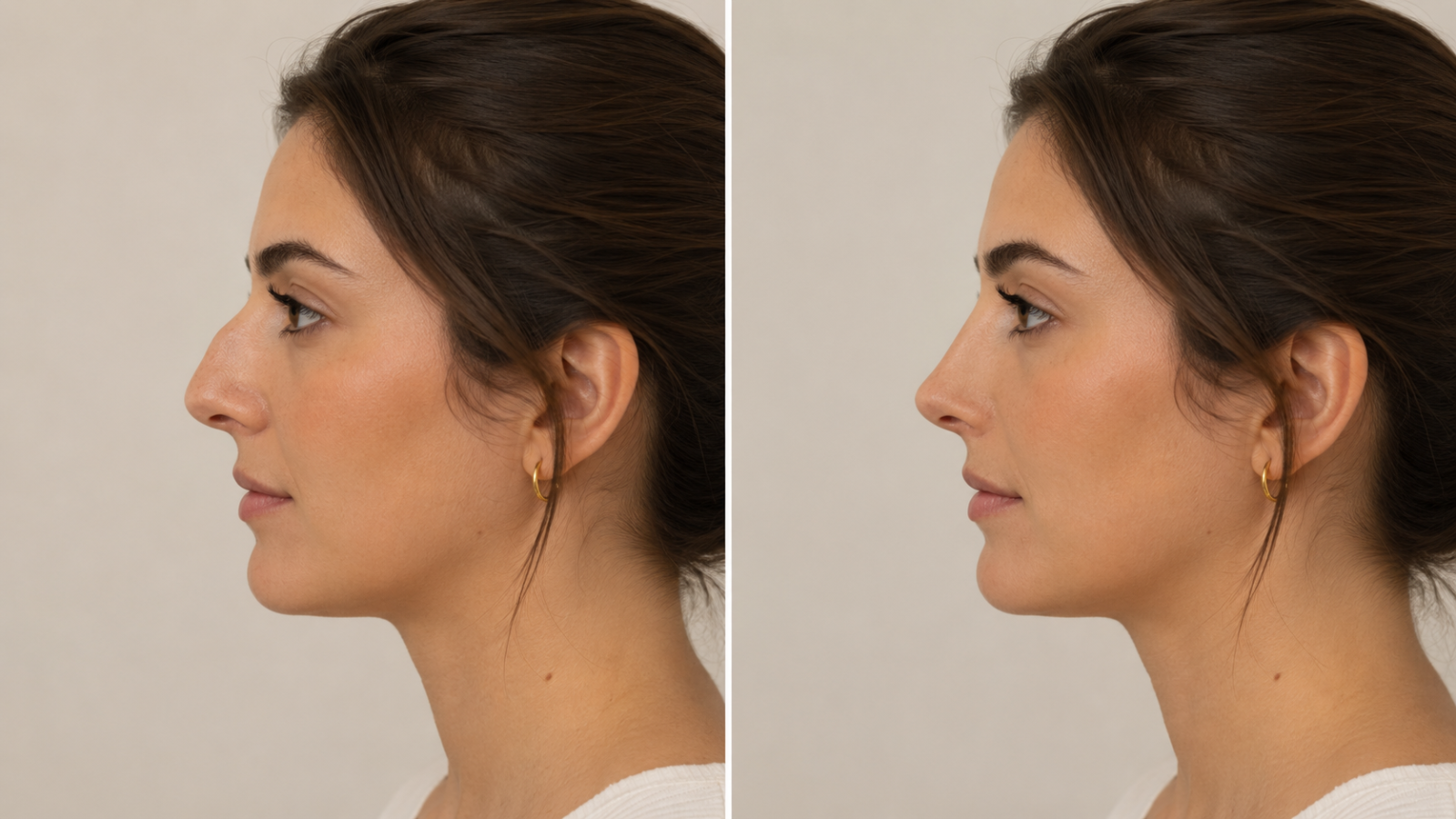
Before and after photos can be helpful for understanding the type of results that may be possible, but they should always be viewed with care. Every nose is different, and results depend on your anatomy, skin thickness, healing process and surgical goals.
During consultation, you can discuss realistic outcomes and whether examples are available that are relevant to your situation.
The aim is not to copy another patient’s result, but to create an outcome that is appropriate for your face, your breathing and your expectations.
Frequently asked questions
What is the difference between rhinoplasty and septorhinoplasty?
Rhinoplasty is surgery to reshape the nose. Septorhinoplasty combines nose reshaping with correction of the septum, which may help improve breathing as well as appearance.
Can nose surgery help me breathe better?
Yes, if your breathing problem is caused by a structural issue such as a deviated septum, nasal valve collapse or narrowing inside the nose, surgery may help improve airflow. A consultation is needed to confirm the cause of your symptoms.
Is nose surgery only cosmetic?
No. Nose surgery can be cosmetic, functional or both. Some patients want to change the appearance of their nose, while others are mainly looking to improve breathing. Septorhinoplasty is often used when both areas need to be addressed.
How long does recovery take after nose surgery?
Recovery depends on the procedure. Many patients need around one to two weeks before returning to desk-based work, although swelling and final refinement can take several months to settle. You will receive specific recovery advice based on your operation.
Will nose surgery results be permanent?
Nose surgery aims to create a lasting structural change, but your nose and facial tissues will still change naturally with age. Swelling can also take time to fully settle, so final results are not immediate.
Is nose surgery painful?
Most patients experience discomfort, pressure, swelling or congestion rather than severe pain. Pain relief and aftercare advice will be provided after surgery.
Can I have nose surgery if I have had a previous injury?
Yes, many patients consider nose surgery after an injury or trauma. The right approach depends on how the injury has affected the shape and internal structure of the nose.
Do I need rhinoplasty or septoplasty?
If your main concern is the outside appearance of your nose, rhinoplasty may be suitable. If your main concern is breathing due to a deviated septum, septoplasty may be more appropriate. If both appearance and breathing need to be addressed, septorhinoplasty may be recommended.
Do you see patients from across Essex?
Yes. London ENT sees patients from Brentwood, Chelmsford and wider Essex, including Billericay, Shenfield, Basildon, Romford, Southend, Colchester and surrounding areas.
How do I book a consultation?
To arrange a consultation for nose surgery in Essex, contact London ENT using the enquiry form or call the clinic team. You can discuss your symptoms, preferred location and appointment options before booking.
Book a nose surgery consultation in Essex
If you are considering nose surgery in Essex, London ENT can provide clear, consultant-led advice on cosmetic rhinoplasty, septorhinoplasty, septoplasty and surgery for breathing problems.
A consultation gives you the opportunity to understand your options, ask questions and decide whether treatment is right for you.
Contact London ENT to arrange an appointment at a suitable Essex clinic location.
Where in Essex do you operate from?
Spire Hartswood Hospital
Eagle Way, Brentwood, Essex CM13 3LE
Tel: 01277 232525
Web: www.spirehealthcare.com/Hartswood
Nuffield Hospital, Brentwood
Shenfield Road, Brentwood, Essex CM15 8EH
Tel: 01277 695695
Web: www.nuffieldhealth.com/Brentwood
Spire London East
Redbridge, Essex IG4 5PZ
Tel: 020 8551 1100
Web: www.spirehealthcare.com/Roding
Find Us in Essex
-
Spire Hartswood Hospital, Eagle Way, Brentwood, Essex CM13 3LE
-
Nuffield Brentwood, Shenfield Road, Essex CM15 8EH
Book Your Essex Nose Surgery Consultation
Make a confident decision about nose surgery in Essex with London ENT. Call us on 0203 865 7225 to book a free consultation.