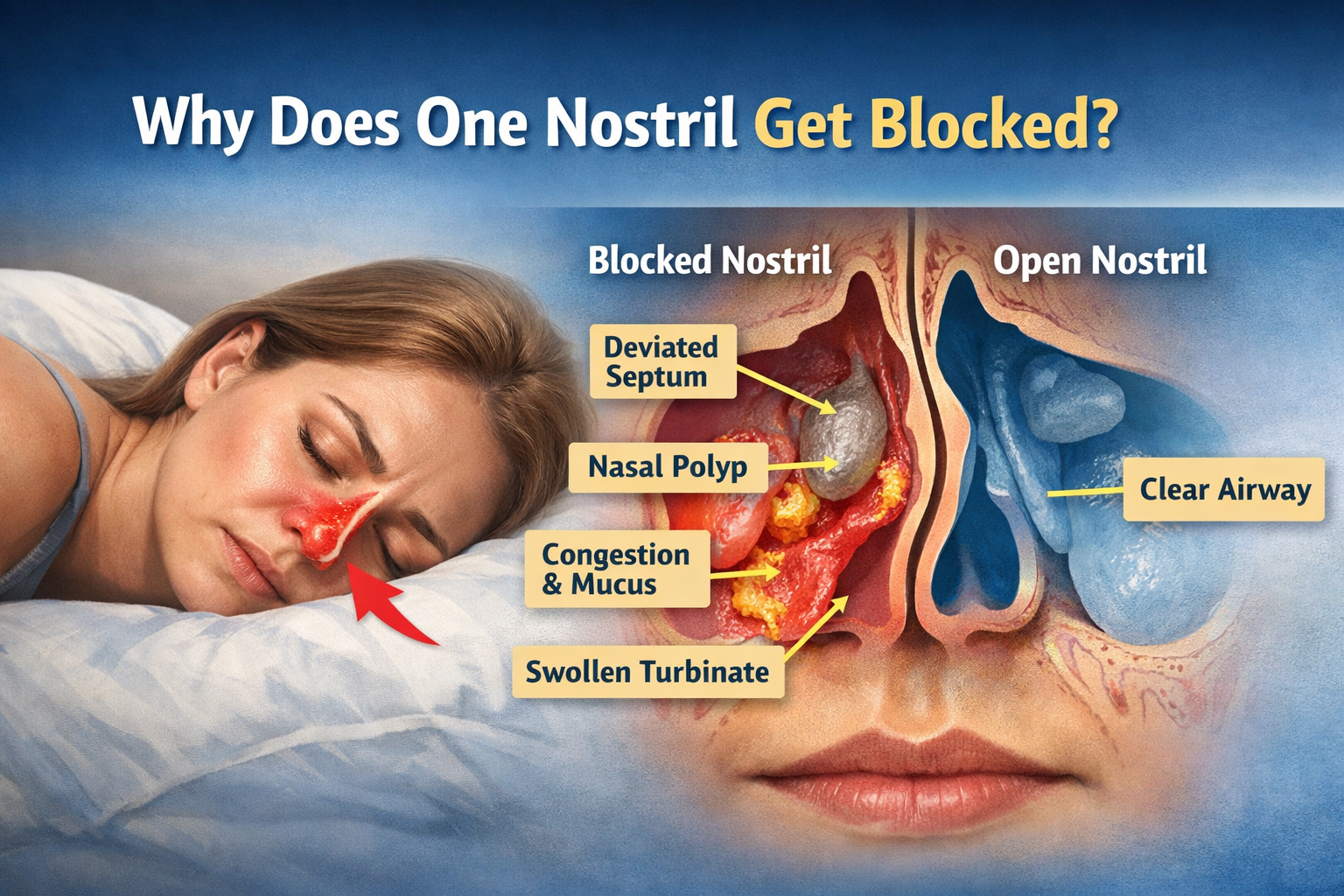
We’ve all experienced it. You’re breathing fine through one nostril, while the other feels frustratingly blocked. It might switch sides throughout the day or feel worse when you lie down. But why does this happen, and is it something to worry about?
In this blog, we’ll explain the common causes behind one-sided nasal congestion, when it’s normal, and when it could be a sign of something more serious.
The Nasal Cycle: A Natural Phenomenon
Believe it or not, it’s completely normal for one nostril to feel more blocked than the other at times. That’s because of the nasal cycle, a natural process where the blood vessels in your nasal lining swell and shrink alternately every few hours.
This cycle helps maintain nasal health by warming and humidifying the air we breathe. You might not usually notice it, but if you’re ill, have allergies, or your sinuses are inflamed, this normal process becomes more noticeable.
Common Causes of One-Sided Nasal Blockage
While the nasal cycle explains minor fluctuations, persistent or painful blockage on one side may point to an underlying issue:
1. Deviated Nasal Septum
The septum is the thin wall between your nostrils. In many people, it’s slightly off-centre, making one side narrower. This can cause one nostril to feel constantly blocked, especially when lying on your side.
2. Sinusitis
An infection or inflammation in the sinuses can cause swelling and mucus build-up on one or both sides. If one sinus is affected more than the other, you may feel one-sided pressure and congestion.
Learn more about sinusitis and how it’s treated.
3. Nasal Polyps
These are non-cancerous growths inside the nasal passage or sinuses, often linked to chronic inflammation. Larger polyps can block airflow, particularly on one side, and reduce your sense of smell.
4. Allergic Rhinitis
Allergies to pollen, dust, or pet dander can cause uneven swelling of the nasal tissue, especially if you tend to lie on the same side at night or are exposed to allergens more on one side.
5. Foreign Body (in Children)
In younger patients, a blockage in one nostril may be caused by a small object lodged inside, which is surprisingly common in children under five.
6. Turbinate Hypertrophy
The turbinates are small structures in your nose that regulate airflow. They can become enlarged due to allergy, infection, or chronic inflammation, leading to obstruction on one side.
Why It Feels Worse at Night
Many people notice one nostril is more blocked when lying down. Gravity plays a role here, as the lower nostril receives more blood flow, which can cause the tissue to swell. This is more noticeable if your septum is deviated or your nasal passages are already inflamed.
Sleeping with your head slightly elevated or switching sides during the night can sometimes help relieve this sensation.
When to See a Specialist
Occasional uneven airflow is normal, but you should consider seeing an ENT consultant if:
-
One nostril is constantly blocked
-
You experience facial pain, pressure or postnasal drip
-
Your sense of smell has worsened
-
You snore heavily or breathe through your mouth at night
-
Over-the-counter treatments haven’t worked
A simple nasal examination or imaging can often diagnose the cause quickly. Treatments vary from medical therapies to minor procedures for structural issues.
Final Thoughts
Feeling more blocked on one side isn’t always a cause for concern, but if it persists or worsens, it could be a sign of sinusitis, nasal polyps or a structural issue like a deviated septum.
At London ENT, we specialise in diagnosing and treating nasal and sinus conditions with a personalised approach. If you’re tired of the constant one-nostril struggle, we’re here to help.